Wednesday, 27 April 2011

A Geological Event


Food and geology have an intimate connection; the communicating of geoscience via a familiar objects and tasks is more likely to enable a knowledge uptake aspect of science and society.  Children love to cook, with a variety of cookbooks aimed at the younger, demographic it seems useful to utilise food in order to discuss a variety of geological ideas.  The intention of these recipes is not to make food that appears like the geological feature, but the discuss geological principles within the outline of foodstuff.

In the UK education is provided within a framework, termed ‘Key Stages’ these are designed to ensure that all children have similar knowledge of all subjects, but still allow flexibility within the school’s provision of education (National Curriculum, 1999). They are split into four separate stages, which lead a child’s education from starting school (KS1) to completion of their GCSE’s at 16 years old (KS4). Within the first two ‘Key Stages’, education is commonly delivered via ‘learning journeys’ (Hargreaves, 2005) whereby a topic is chosen (say for example, mountains) and lessons are delivered around this theme (average heights of mountains in maths, or Wandsworth poetry in English etc) . I have attempted to fit the different recipes / food techniques into Key Stages 1 and 2 within specific areas of the taught courses that they compose of, in order to do this I have related each recipe to the National Curriculum and the aspect of science it can be fitted into a learning journey or similar.   

In addition to providing a more comfortable manner of communicating geoscience, the addition of cookery into a geoscience framework allows for the potential of a learning journey to utilise this work in order to deliver two, often overlooked areas of the Primary School curriculum.  Recipes are simple to follow and can be performed without advanced cookery skills, sharp knives are not utilised for any recipes (allowing children full involvement) and discussion is tailored to a child’s understanding. It is important to consider how students learn, this project allows students who learn by doing, seeing and listening to discover new ideas, with the comparison of something unfamiliar to something familiar particularly good at teaching ideas to children with special needs (Ingersoll et al, 2003).

The table below is the recipes utilised in this project, with the geological ideas and key stage and area of study  it is pitched towards.  The recipes (and blog post) could be used  for other events, for example an event at a museum or utilised in people’s homes.
Foodstuff
Geological Idea
Concept, Key Stage and Area of study within National Curriculum,
Boiled Egg
Layers of Earth
Ks1-2 KS2 Sc4 Physical Processes> The Earth and beyond
Chocolate Brownies
Cumulate Textures
2 KS2 Sc3 Materials and their properties*> Separating mixtures of materials/ Changing materials
Flapjack and Slate
Slate Formation
KS2 Sc4 Physical processes> Forces and motion
Layered Cake
Faulting
KS2 Sc4 Physical processes> Forces and motion & KS1 Sc4 Physical processes > Forces and motion
Jam Tarts
Volcanoes
2 – Expansion 2 (KS2 Sc3 Materials and their properties*>Changing materials)
Crispy Jelly Sandwich
Crustal Rheology
 Sc3 Materials and their properties*
Lasagne Sheets
Thrust Fault generation
KS2 Sc4 Physical processes> Forces and motion
Sugar crystallization
Mineral crystallization
KS2 Sc3 Materials and their properties*>Changing materials & KS1 Sc3 Materials and their properties > Changing materials
Making Chocolate Pillow Lavas
Pillow Lavas chilled margin
KS2 Sc3 Materials and their properties*>Changing materials
Cornflakes
Liquefaction
Expansion KS2 Sc3 Materials and their properties*>Changing materials & KS1 Sc3 Materials and their properties > Changing materials

* within this area of study children are expected ‘to describe and group rocks and soils on the basis of their characteristics, including appearance, texture and permeability ‘therefore this allows for a direct link into the geosciences.

An event in which these procedures could be used in would be a school visit, therefore I have chosen to plan it as such. The discussions below are simply a basic framework of 
considerations in order to allow children full comprehension of the ideas.

Logistics

Transport to the outreach project would be via car, It is not sensible to consider that foodstuffs and cooking equipment may be conveyed via public transport, this presents limited problems – it can be assumed that parking spaces would be available

Timetabling possibly the most difficult part of organising an event, there are extensive pressures on Primary Schools to deliver the best teaching for the time they have with children, and they may be reluctant to allow a change to the scheduled lessons. However, a visitor coming in could be beneficial, since although teaching staff would be required, teachers would not need to develop intensive plans for the session and the novelty of a visitor coming into the school could interest children whom may be otherwise disconcerted with some subjects (such as science) and expand subject knowledge of both pupils and 
teachers.

‘Healthy Schools’ Given the rising weight related problems of the UK’s youth a number of schools have implemented healthy menu’s and brought in restrictions of foodstuffs that can be consumed within the school. Many of the recipes utilised for this project are high in fat, sugar and contain limited nutrition – therefore it may be difficult to include all of the foodstuffs within this project.

‘Fairtrade and Religious Belief’ A growing number of schools in the UK are adopting Fairtrade policies, which could restrict some of the products used; therefore I have ensured that all ingredients, where applicable can be sourced ethically, eggs would be free range. All of the recipes are vegetarian (allowing full participation) and contain no ingredients forbidden under more commonplace religious belief.

Health and Safety
Within an educational environment children and their parents have an expectation of complete safety, therefore I will need to abide by any restrictions put in place by the school.

Allergies:
Peanuts for example are a major risk factor, with current estimates are that it affects 1.8% of children at school entry (Peanut Allergy UK) while eggs, an ingredient commonly utilised within these recipes is a significant allergen for young children – although most grow out of the disorder before entering school (Asthma and Allergy Assoc of America). Nuts within the brownies are a problem, however in the event there is a nut allergy sufferer nuts could be removed from the recipe and replaced by different chocolate types.  In order to mitigate the risk of discomfort for affected children the school would be contacted prior to arrival and potentially some recipes may be discounted.

Food hygiene is a very important point; although no meat is being utilized there is a risk of salmonella from eggs and some of the cooking techniques used could cause burns to participants. Therefore, all eggs will be derived from inoculated hens and well within use by dates.  I currently hold a food safety certificate and have a knowledge of food safety.

Burns: Some of the techniques used carry a burns risk; they will be performed by a adult, with a qualified first aider on hand. Children will be required to wash hands thoroughly with an antibacterial wash before starting cooking in order to control infection. Full abidance by the schools H+S code will be performed at all times.

Pupil Disobedience:
An event of any kind is a change to the routine of school (Richardson, 1988); this could lead to pupils becoming exciting and not behaving within their usual manner, given that the recipes include heating substances there is a risk of burns. The teacher’s guidance will be followed to ensure that everyone remains safe at all times.

Comprehension

Pupil Understanding Although the concepts utilised within these recipes are tailored towards the individual Key Stages which build upon what children are taught earlier during their school career, however children may not have learnt the ideas, or may simply have forgotten them. Therefore it is important to be prepared to go ‘back to basics’ in order to allow all children to grasp the ideas being put forward, regular informal checks on the pupils understanding will be carried out – with further explanation given as required.

Staff Comprehension: Secondary to the understanding of the pupils the level of understanding within the staff could be an issue; experience from volunteering at previous science events has taught me that children view adults as all knowing – and therefore there could be problems with incorrect information being transferred to the children. There are limited ways to mitigate this – and therefore it may simply be a case of getting staff to rely any questions to the demonstrator rather than providing answers themselves.

Linking between food and reality: It is important to the comprehension of the children that they can relate what they are seeing in the food to real world effects. Therefore heavy use of images, videos, diagrams and a variety of different learning methods will be used to give guaranteed. There is potential for a brief, media rich PowerPoint presentation to be given alongside the demonstrations (i.e. so when we are discussing cake faulting, show some faults). By linking the recipes into the Key Stages, discussions on rheology or layers of the earth can be performed after the children have been taught those subjects – ensuring that children have the best opportunities to understand the analogues using food.

Cooking Time: The Brownies, for example take up to 40 minutes to cook (more on an ineffective oven), if the event is introducing a number of different ideas to pupils they are likely to lose concentration as food cooks (as begins to smell!). Therefore it seems sensible, for things that need to be cooked for them to be pre-made for simple demonstration. Recipe and explanation cards will be  handed out for children and parents to make the food together – or could be re-visited at a later date by the school.

Location:
Due to of the scope of this event (it could be used in any school), I have chosen not to tailor this to an individual school. Minor modifications can be easily made (recipes removed or added) depending on the school’s preferences or facilities.

The recipes are in the blog named


Articles Cited:
Asthma and Allergy Association of America. (2005). Egg Allergy.Available: http://www.aafa.org/display.cfm?id=9&sub=20&cont=523. Last accessed 26th April, 2011.
Hargreaves, E. (2005). Assessment for learning? Thinking outside the (black) box. Cambridge Journal of Education, 35(2), 213-224.
Ingersoll, B., Schreibman, L., Tran, Q. (2003). The effect of sensory feedback on immediate object imitation in children with autism. Journal of Autism and Developmental Disorders, 33, 673–683.
Peanut Allergy UK. (2007). Basic Informaiton. Available: http://peanutallergyuk.co.uk/basicinfo.html. Last accessed 26th April, 2011.
Richardson, D., (1988). Why Children Misbehave. Oaklahoma Cooperative Extension Service. t-2325,1-5.
The National Curriculum for England: Key Stages 1-4 (1999) ‘Science’ The National Curriculum for England: Key Stages 1-4. London: Department for Education: Qualifications and Curriculum Authority

Who let the Dinosaur in?


Although I am someone who really does not like dinosaurs, I can see their power over children; and a while ago, I stumbled over this little video:


What better way to get children interested in palaeontology (and probably a bit of geology) than a huge scary dinosaur? The thing moves how I would imagine it to; as part of my universities outreach program, we have a ‘dinosaur runway’ thing. Which is essentially a big piece of paper which children run over in oversized dinosaur shaped and then we compare their stride lengths with really dinosaurs and tell them a bit about it – the children seem to love it and I hope it interests them in geosciences.


Events like these can be lasting memories to children, and if they contain an educational message (a quick interesting presentation of dinosaurs or geology), it can be a wholesome outreach event. One of my most vivid childhood memories is a visit to a local ‘attraction’ which had a fake earthquake generator – and discussion of how it earthquakes are generated (this to me, was much more interesting than the fake dinosaurs nearby). It would be great to see more of this sort of thing in the UK; I can’t imagine a fake dinosaur costume costs too much to produce – but gives children an excitement into paleontology, lifting dry bones and pictures to a real, interactive life.


Sunday, 24 April 2011

Every Day Problem


As geologists, we like to go on about how important minerals are in everyday life, which led me to wonder; what are the highest profile minerals around? Well, I chose to look at products available for household consumption; including:

Lucozade offers me a drink that will: ‘Help Replenish 4 minerals lost in sweat’, It turns out thought that the product, clearly is not developed in conjunction with any geologists; as the minerals, they specify are much more elemental: ‘sodium, potassium, magnesium, calcium’.  While  variety of food describes itself as ‘full of minerals and vitamins’ – although actually contains elements...

While Dove has incorporated ‘beauty mineral’ into its products, strangely the  substance that the world should be clamouring for is remarkably common:

But what affect has the mineral water industry, cosmetics and lucozade had on people’s perceptions of minerals?  - to find this out, I decided on an impromptu survey, asking shop assistants and scared members of the public as to what they thought a mineral was:

Pure and fresh - but watering down minerals?
4/16 (so ¼) thought they were things in ‘like mineral water’
2/16 (so 1/8th) fell for the bait (actually this was in Superdrug, which is a quite interesting) and decided that they ‘make your skin look good’.
9/16 (so just over half) went with the answer I was after along the lines of ‘make rocks’
1/16 sheepishly didn’t know, but that’s fair enough.

Given that the official (ish – I got it off Wikipedia) definition of a mineral is:


The usage of the word ‘mineral’ in the cosmetic industry is fairly well balanced, after all, look on the back of your toothpaste you’ll see a whole host of minerals (usually with nifty pharmaceutical names) which have been derived from the squeezing and heating of the earth’s crust over time. However, the usage of mineral in terms of water and drinks – is clearly absurd, yes minerals are composed of elements; but if your water had little bits of olivine sitting in it, then it would be mineral water. Just because it has come out of a spring and has a few more/less bicarbonate ions than water from the tap does not mean it is mineral, it’s just elemental/compoundal.

So how does this affect communicating geoscience?

Well, it’s rather difficult to say, any exposure to the earth’s materials can be said to be beneficial, plus an inquisitive individual may well wonder where on earth you get ‘pearly’ mica from – and discover the science. The usage of ‘mineral’ in mineral water though, could be lead to misleading thoughts – particularly in children, whom experience of minerals in other forms is limited.  However here in the UK at least, mineral water does try to prove it’s ‘volcanicity’ via the geology its water has flowed through – but this hides a potentially more concerning thought.

Present in many everyday products -
but hidden
People just don’t know where stuff comes from. Recently I acquired some asbestos, in mineral form, and while treating it like a souvenir from Fukushima, I asked my dad, who within his job has occasional contact with public mineral enemy No1 – he was startled to find where it came from. While my girlfriend has never given a thought to what makes the glossy magazines glossy nor is there amazement at when you explain what plasterboard is. Recently I was in a jewellers who described a garnet (amandine I think) as ‘valuable and rare’, garnets are by no means rare nor difficult to get hold of – what usually typifies value; indeed getting pretty ones could be considered a challenge – but I’ve found them! Should public knowledge be stuff that people know what is in the ground? And how much of it is in there?

Maybe it’s just me who wants to know what the stuff we us every day is derived from – but it seems sad that companies can use the word ‘minerals’ in such a manner as the public understanding of them is so low. 

Saturday, 23 April 2011

One day at a time - Earth day and Communicating Geoscience

It's on Google!

As geology is the study of the earth, it seems like a decent enough idea to have a look at how some geological organisations have acted in communicating the event and it’s message...


USGS: has produced a single page on it: 

That’s about it really, an interesting piece of writing regarding the history of the day (an oil spill in the 1970s) – a couple of events in the states; (http://www.twitlonger.com/show/9pnpqp) but all in all, for a day which the USGS could go mad over – very little actually is on offer.

Geological Society of America: Although not really mentioning Earth Day (bar in passing at the bottom of the site), the GSA has a few resources for Earth Sciences Week – clearly 7 days is better than one. http://www.geosociety.org/educate/esw_activities.htm, with a large variety of different target audience – clearly intended to give a wide variety of interest to both geoscientists and listeners – the weeks website: http://www.earthsciweek.org/ which, on is the 12,215,802th most visited site on earth (USGS for comparison is the 1250th most visited site on earth). There are plenty of links from the site – but the week is in October, while the day, which is considerably higher profile (it made it onto Google homepage!).

Back on this side of the pond, the BGS nor Geological Society of London appear to have any outreach – the UK does have a Science and Engineering week, but that hardly stirred the medias (And therefore probably the public’s) mind, nor does that have a directed environmental message.  

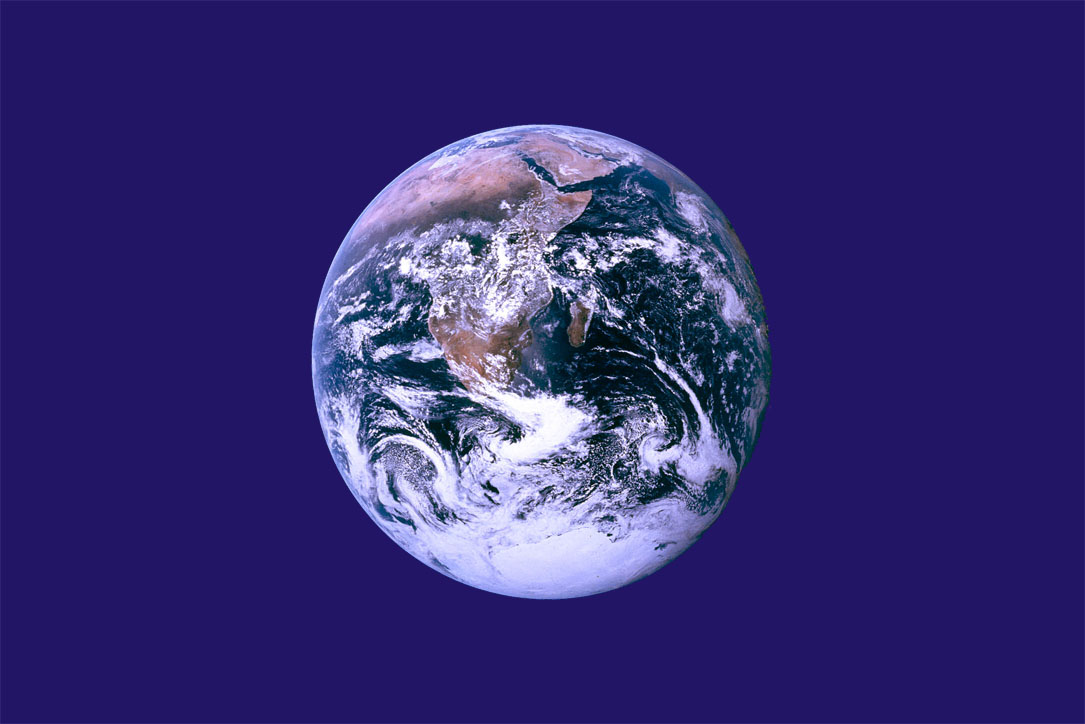
The Unofficial 'flag' of Earth Day
Meanwhile on TV, here in the UK there is nothing on the media, no, even subtle programming into the geoscience, instead the only two programmes on the BBC featuring the Earth are a play and Dr Who. The day coincides with Good Friday, so there should be plenty of time to slot in an interesting programme on geoscience or the challenges facing our world.

Overall in the UK there seems to be a lack of interest in Earth Day, which considering that this is the country that invented geology (more or less!), has lead pioneering research into climate change and has signed the Kyoto protocol – we should have the same resources available over here. The day is described as ‘worldwide’ day celebrating the Earth – why are we, in the UK being such party-poopers?

Tuesday, 19 April 2011

Sun, Sea, Sand and Good Exposure - Guide Books and Geology


Summer is well on its way; with days getting longer and coursework deadlines shorter it’s time to plan something to do with what small sliver of my student loan and overdraft remains. Which, along with the beautiful smell of summer starting to appear in the air set me thinking about guidebooks; so I ventured into the loft, dodging many a childhood toy to find a sizeable collection of books to see what they, if anything, say about the geology of the region they are describing.
Guide books could be great transmitters of geological knowledge, they are read at leisure, when people have time to both learn and see, often interesting geology corresponds with pretty places – a match made in heaven?

The books I have chosen for this rather un-scientific survey  are all for regions in Europe, (mainly France, Germany and Italy) from a variety of publishers; Lonely Planet, Rough Guide, The Green Guide and DK Guides – all very popular well stocked guidebooks both here in the UK and further afield.

Lonely Planets Option 
So, looking to my favourite holiday destination; Germany – also a country with interesting geology (foothills of Alps, Messel, Rhine etc) . The Lonely Planet makes no mention of any real geology;  ‘The Environment’ section, with all manner of information on animals and plants in Germany (some of which extinct)  and discussion of animals most visitors probably won’t see (Sea Eagles) – only the Eifel Region of volcanoes gets two lines; otherwise Germany is rock free.
DK, although much better noted for publishing really good children’s books have also dabbled in travel, producing rich books with lots of lovely diagrams of castles and two pages devoted to German authors, who, although great really do not appear in many holiday snaps. Even Eifel is ignored – but two pages on an obscure art gallery prevail – the book has ample opportunity to slide in geology – but would rather deal with paintings.

The Green Guide; published by Michelin (of tyre fame) fair much better, they have a whole ‘Landscapes’ page – which gives a quick overview of the Geology of Germany and then looks into more detail – with individual complexes named and how they relate to the geology of the region (i.e. Coal in the Rhin/Rhur valley) . It’s not perfect though, the book refers to the proterozoic as the ‘Primary’ era, which although easier on the non geologically trained, is wrong.  Still, it is a much better effort than DK or lonely Planet.
Beautiful Diagrams and Drawings,
but no geoscience

Looking to the South; into the beautiful, majestic and mountainous Switzerland, Rough Guide have published a nice friendly, concise and very full guidebook to the little country; well noted for it’s geology, from Suess’s insights into Plate tectonics to the country as a natural lab for glacial and tectonic processes. Rough Guide although discussing the beauty of the country – shamefully ignores the geology.  Instead, it finds plenty of time for old monarchs, leaders and anecdotes’. The guide is so good in other respects, offering complete knowledge of the regions history, culture and attractions – but what people are walking on, what has made that landscape and sculpted the history and culture is ignored.
And on to Italy; geologically fascinating and culturally rich. The Lonely Planet has a pleasant guide to the region – which unlike the German guide features an insight into the countries geology.  It gives an overview of the countries geology in simple pleasant language. Although, that is to be expected, the country hosts many geologically themed tourist hotspots (Etna, Vesuvius and the Campi Flegrei nr Naples) so since background information is provided into the countries monarchs and monasteries it seems right that the rocks are given a look in too.

DK guides also make an effort to redeem themselves too –their Italian effort features the Dolomites, beautiful mountains and they even mention the rocks – not in much detail, but at least to place a bit of geology in admirer’s heads – the volcanism gets a look in. Nevertheless, the book has rich diagrams of monasteries and castles that run over double pages – why not a brief diagram of Italy’s geology? Explaining the landscapes and volcanoes in a way that clearly works with the public could be exceedingly valuable – nothing special, but something informative.

Rough Guides have also published a guide on the Greek Islands – fascinating geologically, not that Rough Guide has taken any notice. Even Santorini – home of one of the greatest volcanic eruptions in history has it’s geological past only presented via the word ‘Caldera’ – hardly a worthy inclusion for such an incredible event.
A better effort from Michelin 

At present I’ve looked at guidebooks for a whole country (or large region), where perhaps ignoring the rocks could be acceptable – they have plenty of information to pack in – what about local guides? Unfortunately, I only have one type of guide to compare – the Green Guides by Michelin;

The Green Guides do not disappoint – I had expected good things having read the German one, but their guide to ‘Burgundy and Jura’ (regions in eastern France) was really very good, featuring a map of France and during the Mesozoic (which is a bit broad brush but useful). Although geological names are not used – instead ‘Secondary Era’ is used - but it is a start, given my affection for maps it is nice to see. The guide also runs through the regions geology (and resources) in a chronological session. The guide also provides a cross section – with individual discussions of the regions geology allowing tourists – the public to (hopefully) be able to make tangible links between the rocks below them and the landscape above them. The regions famed caves also have a geological interpretation – caves are rather tourist hotspots so relating their geology to tourists is always valuable.
Similar stories are present in the other two ‘Green Guide’ books that I have (Provence – with lavender on the cover and the Dordone. Looking back across to the UK the ‘South Downs Way’ guidebook, by Jim Manthorpe gives a decent description of the downs geology (to be fair – it is just chalk) and its structure - in fact in many ways its better than the description given by the area's local authority. Given that, people who read this sort of text are likely to be‘outdoorsy’ it seems sensible that a discussion on what makes the outdoors would be present. However looking through the book it’s not entirely fair to the geosciences, more space (and words) are handed over to Underground Power lines (important – but how many walkers’ questions will be about them?). Plus the discussion on geology barely touches the Weald – which is observable across much of the path; leaving many a walker (including my parents!) at a mystery to the landscapes formation.

So, guide books and geology?

Well, they are not designed to transmit geological information – but they are designed to give visitors to a region a taste of the areas attractions; which geoscience can be an important part of – the landscape is always there, why not then, give a nod to its creation? It seems very narrow minded of guide books (excluding those of ‘The Green Guide’) to exclude geology. After all, they give detailed discussion into the human history of an area; why not the (often more impressive) natural history?

Of course, the sample I have used here is limited, so I popped down to my local, previously slated bookshops to see what they had on offer. The patterns I have noticed with this small group of books is applicable to most other guides – even those of Cyprus, where the geology is fascinating, seem to be much more eager to discuss dancing and small villages than the story of the island.

There are a fair few, specific geological guidebooks, the GSA has published a fair few but these are not really suitable for the public, nor cover the sort of regions that guide books cover, plus the GSA is going for an already interested audience. About Geology has a bit on the geology of San Francisco, which if picked up by a tourist would be really cool (nice photo’s too) – but this is hardly readable from a delayed plane.

Guide books (from experience) appear to be read at times of relaxation; while waiting for a plane, train or automobile – what better time to give a reader geological information, impart knowledge and interest in a practical sense, while they have time, so often neglected in daily life to explore a region’s landscape and geology. I’m not envisaging entries like ‘the Cafe on the square serves an exquisite coffee, also provides brilliant views of the Triassic limestone over the town’, but a nod akin to those in the Green Guides would be good: the books after all are there to inform the public, communicate facts and knowledge – maybe they could communicate geoscience too. 

Monday, 18 April 2011

Answers on a postcard - Yahoo! Answers and Communicating geosciences.


Yahoo! Answers is a community driven question and answer service; the idea being that everyone answers each other’s questions and provides a wholesome and driven series of answers to everyday questions. Yahoo! Is the 4th most visited site in North America and it’s answers service, set up in 2005, is clearly displayed on the sites homepage. It’s difficult to judge it’s popularity, but Google records that it has 1/36th of the amount of searches for Yahoo! Answers compared to Wikipedia – the large numbers of questions point towards a fairly busy site; which runs questions from all facets of life – including geoscience.


So what benefit does this site (and many others) have in terms of communicating geoscience?
'The Core' has an awful lot to answer for

Well, it would be great to have exposure of the geological sciences and a Q&A site that could provide honest, well researched sensible scientific information would be valuable as a method of getting the public direct and efficient answers. I’ve already touched upon how the Geol Soc of London has done a similar (although infinitely better researched) Q & A service. How does Yahoo! Answers fair as a method of geology and public involvement?


I really hope this was a joke.... or poorly placed
The site has a huge amount of information available to users with a variety of different knowledge levels, anyone can sign up – and answer any question. Questions continue to be available on the web after the ‘closing date’ – and regularly appear on more inane online searches. Questions can be asked on anything, so have a wide variety; from ‘what is the weight of the earth?’ to ‘Will the world exist in 2012’. Answers can be given by anyone (although newer users have limited questions per/day) – which is the main problem. Some people, it turns out can be idiots...


Although Wikipedia has been lampooned for its public involvement and problems with correct data, it is nothing at all, in comparison with Yahoo! Answers. The results to people’s questions are not checked (except for rude words etc) and therefore any answer can stand; which results for a lot of questions creationism wriggling in, which given the context of some of these questions the ‘asker’ may well end up feeling is a decent answer. Yahoo has utilised various Celebrities an public figures to stimulate questions; alongside featured questions which are highlighted as good examples – but these are in the minority.


Hopefully not - although it will wipe off my student loan
Good answers are awarded ‘points’ which don’t mean prizes, simply numbers; so there is no fiscal reason to give good answers – therefore any involvement is purely out of peoples good heartedness. Good heartedness, however does not make up for a lack of a of knowledge; which does result in answers being, often, complete rubbish – or (in my opinion) worse, with plenty within Earth Sciences that utilise Creationism, allowing pseudoscience to can get an foot in the door alongside more intelligent answers (there are a couple). This does allow for the old ‘let the public decide’ ideas about our Earth’s history but requires decent science to be in attendance. Plus, it appears that many people (probably children) are simply putting homework onto the site, which disregards the studying they could be doing, finding out more about their world rather than simply watching (often stupid) answers appear on their screen.


However, I have found some positive gems about the service – since anyone can present a question, the variety of questions out there is brilliant and some answers are good – although they are virtually all lifted from Wikipedia, which is probably more accurate than Yahoo! Answers – but still not centred in geological organisations.


What use is Yahoo! Answers then? Beneficial or not?


The lack of expert opinion severely hurts the site, it is, very often the blind (or at least hideously mislead) leading the blind – in this sense the service could be doing more harm than good – but what if a mainstream, useful and esteemed geological organisation got involved? Would that be worth it?


Well, they could be involved in giving decent, correct and useful information to these answers; a ‘live’ version of the GSL’s ‘Ask a Geologist’ page or a similar service to Yahoo Answers on a proper site; where answers are vetoed, to ensure that useless and incorrect answers are not displayed, could be beneficial. Although, this sort of thing already half exists; the USGS offers plenty of email contacts, which give prompt responses (having emailed them myself, not about something ridiculous though) – and are from people who actually know what they are talking about. Alternatively, many answers could be answered via a simple Google search via pre-existing answers – it would have taken the asker considerably less time to have performed a Google Search rather than placed the question on Yahoo! Answers. So, in conclusion, Yahoo Answers is not a viable manner of communicating geosciences (or in fact any science) and the time that could be utilised by geological organisations using the site would simply be a waste of time.

Wednesday, 13 April 2011

Children’s TV & Science ... the missed link


It’s Easter holidays here which set me wondering, children do not just learn about the world from the classroom, they learn about it from being outside, the media and their parents. From my childhood memories I don’t recall visiting too many geological sites, we went to plenty of museums, but frankly Sussex hardly abounds with interesting Geological sites (actually 
seeing a rock is an event) so what does the media provide?

In the UK there is a whole host of children’s TV channels, the two main ones running from 7am until 7pm are CBBC (run by the partially state owned BBC) and CITV (run by Independent broadcasting funded via adverts). There are also channels only available via satellite or cable – but since they are not available to all homes and feature virtually nothing of value I’ll ignore them

So, what’s on TV?


On CBBC, http://www.bbc.co.uk/cbbc/watch/whatson/, today, the 13th of April children could enjoy 2hrs 50 of ‘The Legend of Dick and Dom’ which is about as wholesome as a Happy Meal and features nothing of value, let alone educational value. 3 episodes of ‘Arthur’, a variety of light drama interspersed by news.   A virtually identical story is present with tomorrows planning; although that does include 30 minutes of nature programming in the form of ‘deadly 60’ a Steve Irwin inspired search for animals that can kill you. The Children’s programming does not just infect a channel it also spills over onto the BBC’s flagship channel, that actually has some science, ‘Blast Lab’ which is a sort of experiments show – dealing mainly with making a mess via the mediums of physics and chemistry

On CITV, the story is equally poor,

http://www.citv.co.uk/page.asp?partid=31 for today, the 13th of April,
No box of wholesome scientific programming for children here!
from 6am to 6pm children can watch; Fireman Sam (maybe he sorts out a volcano? ), ‘The Cat in the Hat Knows a Lot About That’ – ‘that’ appears to be magical adventures. Just under an hour of Pokémon, bit of Teenage Mutant Ninja Turtles, two hours of ‘Horrid Henry’, ‘Almost Naked Animals’  and ‘Atomic Betty’ ... all in all no scientific TV.

So, between the two major children’s TV channels there is only one hour of science program, within the Easter holidays where it can be expected that the channel will enjoy significant viewership (partially today as there is some cloud over the UK). Now of course it is holidays, but surely children should have more educational program, science as a whole is such a brilliant subject so much more exciting and interesting that bloody Pokémon or ‘Dick and Dom’.  

Alternatively the channel could use this time to teach children to cook, healthy eating, community guidelines – areas which are important but ignored. Even history, typically an area of great stories and plenty of blood and disease has been replaced by rubbish.

Within mainstream TV the BBC has a world renowned record for producing brilliant nature, travel and scientific programming – children’s programming; arguably an important part of a child’s development is left to be a variety of worthless programmes.  When I was younger (many moons ago....) there was a brilliant nature program ‘The Really Wild Show’ I can still remember some of the information shared on that program, it won a host of awards – but now is gone; what will children watching TV today know? Little of science, nature or history. Originally, I had intended that I would find a children’s TV program that was fairly scientific and write a brief post on it, I am dismayed that no such program, geological or otherwise exists.


Future Scientists?
Image source: The Telegraph
The BBC (I’ve given up with ITV – they never produce anything worth watching anyway) does run a children’s news program, named ‘Newsround’ which airs from between 2 and 10 minutes (not to get in the way of quality resourceful programming). It covers essentially the same stories as the ‘adult’ news, but in a more child friendly way, well the service had, of course reported the Japanese quake and terrifying tsunami. It has given simple, pleasant descriptions and even a demonstration (from a different BBC program, but still useful) which can give interested children information into a fascinating phenomenon... but Newsround also has to cover news, sport, celebrity rubbish and whatever else – in a maximum of 10 minutes; severely stunting its usefulness.  From volunteering within events where children are present they do have an interest in natural sciences and geosciences, so why is an interest that could evolve into a passion being denied information at such a young age? Quite simply it is irresponsible of both the BBC and ITV to not include factual, useful children’s programming within their broadcast.