Showing posts with label USGS. Show all posts

Saturday, 23 April 2011

One day at a time - Earth day and Communicating Geoscience

It's on Google!

As geology is the study of the earth, it seems like a decent enough idea to have a look at how some geological organisations have acted in communicating the event and it’s message...


USGS: has produced a single page on it: 

That’s about it really, an interesting piece of writing regarding the history of the day (an oil spill in the 1970s) – a couple of events in the states; (http://www.twitlonger.com/show/9pnpqp) but all in all, for a day which the USGS could go mad over – very little actually is on offer.

Geological Society of America: Although not really mentioning Earth Day (bar in passing at the bottom of the site), the GSA has a few resources for Earth Sciences Week – clearly 7 days is better than one. http://www.geosociety.org/educate/esw_activities.htm, with a large variety of different target audience – clearly intended to give a wide variety of interest to both geoscientists and listeners – the weeks website: http://www.earthsciweek.org/ which, on is the 12,215,802th most visited site on earth (USGS for comparison is the 1250th most visited site on earth). There are plenty of links from the site – but the week is in October, while the day, which is considerably higher profile (it made it onto Google homepage!).

Back on this side of the pond, the BGS nor Geological Society of London appear to have any outreach – the UK does have a Science and Engineering week, but that hardly stirred the medias (And therefore probably the public’s) mind, nor does that have a directed environmental message.  

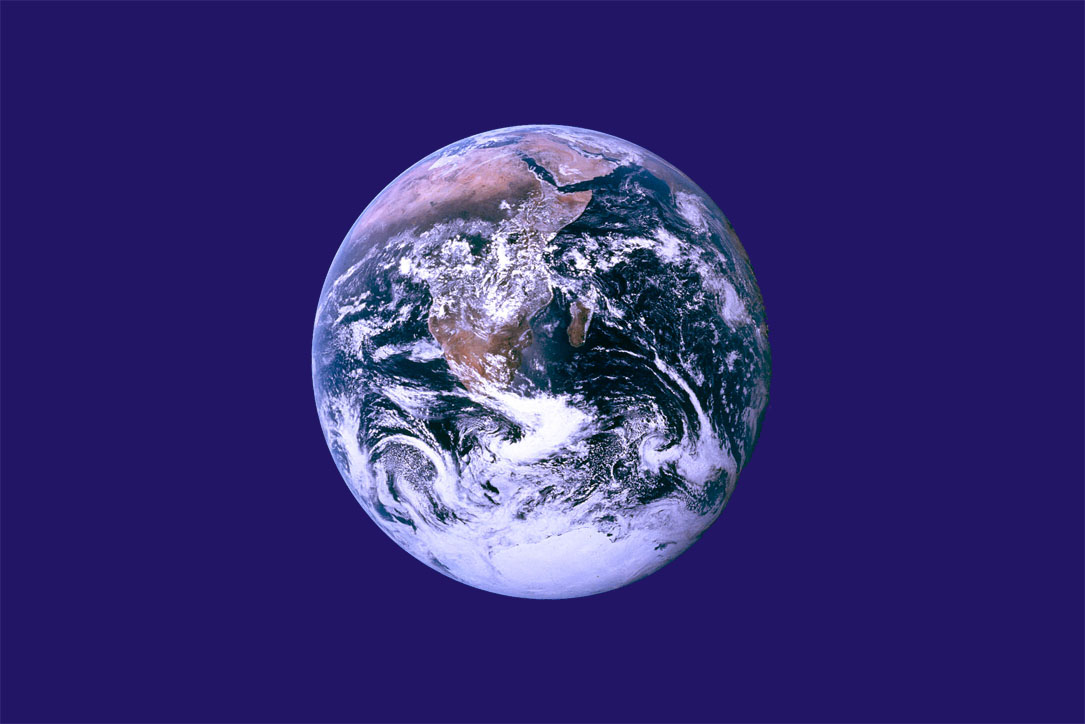
The Unofficial 'flag' of Earth Day
Meanwhile on TV, here in the UK there is nothing on the media, no, even subtle programming into the geoscience, instead the only two programmes on the BBC featuring the Earth are a play and Dr Who. The day coincides with Good Friday, so there should be plenty of time to slot in an interesting programme on geoscience or the challenges facing our world.

Overall in the UK there seems to be a lack of interest in Earth Day, which considering that this is the country that invented geology (more or less!), has lead pioneering research into climate change and has signed the Kyoto protocol – we should have the same resources available over here. The day is described as ‘worldwide’ day celebrating the Earth – why are we, in the UK being such party-poopers?

Sunday, 13 March 2011

Down to Earth.


Google Earth is without doubt Google’s best products, forget finding out what’s my local take away, forget rapid transit around a city – I want to look at my house in amazing resolution and wander around the Californian Desert looking for faults!

Possibly the most powerful thing about the program is its ability to easily incorporate third-party data onto the projection of earth, most of this information is free, and files are fast to download. Many a fieldtrip I have been on with the University has utilised the software to provide a image to demonstrate the presence of a fault or particular bed - I even used Google earth to find faults in my dissertation mapping area that had eluded me in the field (to be fair, they were cutting schist). Information extra to the program is downloaded to the user by a small (since the data is then streamed from the web) file termed a ‘kml’.

The BGS have released all of the UK’s geology (At a fair resolution) as a kml file, and although it makes the program run bit slowly (best to zoom in, find an area then turn it on). It’s a great resource, and given that in a previous post I highlighted the importance of maps in interesting people to the geosciences the availability of free, exciting maps presented in a naturally pleasant manner on a simple to use – but powerful program is brilliant.


Image of the Geology of Central UK - each bed can be clicked on for further data. Resolution improves when zoomed in. A brilliant free resource for public communication of Geology. 
The USGS, however are not left behind; they have released an earthquake locator kml file; which also gives the locations and movement of worldwide tectonic plates. Alongside, mainly Californian resources into tectonics. http://earthquake.usgs.gov/learn/kml.php - With supporting material provided. Recent events in the far east, have highlighted the importance of an understanding of tectonics and downloading that particular kml file really highlights the incredible activity that has resulted in such devastation to a sizeable area of Japan.


View of Japan and the Aleutian Arc from the USGS highlighting the activity in Japan over the past few days 
Given that the program is provided by Google you would expect easy integration with resources online; Websites (or lecturers) can provide a .kml file for download to show a certain feature (glacier, mountain, fault, volcano etc...). While the program itself features further third party features, such as images of natural wonder (and animal migrating) or a factor of human life being put under threat (such as global warming). What is missing though, considering that seeing something in the field is a lot better than in a textbook, is geological field localities; people could virtually visit Hutton’s unconformity to learn about geological time, or explore the Barrovian district of Scotland to learn about metamorphism. These resources may be specialised but similar ones exist for biosciences and conservation; why not geology? The perfect science for Google Earth.  


Brief Footnote:
http://geosociety.wordpress.com/2010/11/03/where-on-google-earth-219/
Great post about a nice little online game to play

That would be an Ecumenical Matter


The premise of the video is one of trying not to get the old drunk guy to offend the bishop by insulting him in some manner,

This leads me to the question, with some links to the video; should religious groups have any involvement in science policy (particularly geosciences) . Now before I get started I really ought to point out that I have no religious faith and find blind faith in invisible friends a poor utilisation of 4 billion years of evolution. I will try to be balanced, but there is no guarantee.
So science is based on imperative evidence, deducing theories and testing them against observations. Then discussing these observations and theories within the larger framework of science to produce what can, after a substantial body of work be termed as ‘fact’. Religion is not, it is based on stories written millennia ago. Now it’s important to consider what religion has given science, Islam essentially produced modern astronomy, while Universities funded via Religious organisations have allowed leaps within science in both modern and ancient times.  In today’s science dominated and driven society though, there is little place for the word of an invisible lord.

Stem Cells are very possibly the most exciting area of medical research now, a simple view of news sites shows what opportunities this technique can give the world. With Heart Disease to Skin Replacement under the radar of Stem Cells, this is a beneficial technique to mankind. Ethical questions are aroused, via the creation of an embryos life to produce the necessary cells, but this is an Embryo, it has no real brain, nothing tangible that is a ‘life’.  Moral objection against such a beneficial treatment could be founded on perhaps a moral superiority, but let’s remind ourselves that Christianity doesn’t value all life as equal:

`As for your male and female slaves whom you may have--you may acquire male and female slaves from the pagan nations that are around you.’ Leviticus 25:44- New American Standard Version (1995).

Plenty of Christians in argument to this little passage will instantly respond ‘It’s the Old Testament, so therefore it doesn’t count’ or something to that manner. Well, that’s handy since one of the big problems with Science and Religion seems to be right at the very beginning.  Yes, it’s time to get the shoe horn out, since for Geology we need to look for some Answers in Genesis.

Most geologists know the idea of creationism; essentially that the ‘mainstream’ scientific theories about the formation of the earth and associated life are incorrect and the story of genesis, as portrayed within the Bible is correct. Evolution is simply a ‘theory’ as is plate tectonics. This would be fine if it wasn’t for the widespread belief of this within the American (and other areas of the Globe). There are some frightening statistics;


Essentially only 16% of the American Population ‘believe’ that humans evolved. Thankfully the seven day creationist view is down (presumably because there is an increase in ‘intelligent design’). It would be tempting to apply this disbelief in evolution as to ignorance about the existence of the process. However further stats prove otherwise:  

How familiar would you say you are with each of the following explanations about the origin and development of life on earth -- very familiar, somewhat familiar, not too familiar, or not at all familiar? How about -- [RANDOM ORDER]?
2005 Aug 5-7
Very
familiar
Somewhat
familiar
Not too
familiar
Not at all
familiar
No
opinion
Evolution
45%
37
10
7
1
Creationism
45%
29
15
9
2
Intelligent design
17%
28
27
25
3


Despite the familiarity with evolution (45% and 37%), ‘belief’ in it is only sits at 16% (or 13% when the table above was produced), meanwhile creationist has a similar idea (presumably due to the integral links with the ‘theory’ and Christianity).

 The question is then, why is there such a familiarity with evolution but such a low ‘uptake’? Is it that people have made a decision to not accept evolution based on the evidence – or simply their faith is o great to allow science to erode it.
Therefore how does mainstream (or secular) geology act in the face of theistic interpretations about the worlds’ and life’s’ origins?

Looking at the USGS’s tagline: ‘Science for a changing world’. There is a strong implication that evolution would be present, and given that Darwin’s, Wegners and others principles are integral to comprehending the geological record there should be a fair amount in support of the theory. Not so, searches for ‘evolution man’ and ‘evolution fossil’ returned no results describing the process. Creationism was barely represented; quite rightly. It seems very odd that the geological survey, the public body which gives such exceptional resources for tectonics and seismology does not seem to promote evolution. The theory is taught in (most) American schools but resources are lacking from the government body which has such a great opportunity to provide exciting and stimulating resources into evolution.  The British Geological Survey Follows a similar pattern

NHM: The Natural history Museum; is funded primarily from Government sources, both for research and outreach. It is staunchly non-thiestic. From ‘The Darwin Centre’ and plenty of resources on Evolution, there is no provision for creationism; with searches into it revealing purely scientific material. Is this beneficia? A comparison of the two theories would allow a large proportion of the non-evolutionary believing population to grasp the theory and improve their knowledge, simply discounting something that is fundamental to a large group of people’s beliefs is only going to alienate them; potentially not allowing a full comprehension of evolution.

A clear statement on evolution ‘The Geological Society of America strongly supports teaching evolution and the directly related concept of deep time as part of science curricula. GSA opposes teaching creationism alongside evolution in any science classroom’. Although vocal in its opposition the GSA takes an admirable line, it gives sites for both theories, which allows people to make up their own mind – but with an esteemed and world renowned organisations view in tow. The site provides a wealth of fairly neutral resources, including an interesting debate of both: http://www.geosociety.org/criticalissues/ev_shermer.htm. It is then, a pity that organisations with more prominence (the USGS and NHM) take such polar lines in discussing the controversy surrounding our existence.

Finally; Conservapedia

If you think you’ve seen some rubbish on Wikipedia, well you haven’t seen anything yet. Conservapeida is a ‘wiki’ based on a right wing viewpoints. Having been banned from it hundreds of time (one time for having a ‘provocative’ name featuring the word ‘geology) I can without doubt say that modern, progressive, peer reviewed geology has no place there; evolution is poorly represented and creationism held as truth. It’s a lost cause and an appalling example of geosciences communication.

So, in conclusion. Where can geosciences communication place itself on the creation/evolution debate? Should it sit on the fence and take both into account before promoting the more accepted, peer reviewed theory? Or should it ignore all creationism and not give it the time of day – simply ignoring a theistical interpretation of our earth’s origins? Although I have no faith, I feel that it would be foolish to ignore many people’s beliefs, it is better to co-operate, give people a reference point from where they can learn more but in a more pleasant manner than simply steamrolling over long held beliefs

Tuesday, 22 February 2011

No Lasting Shock.

As in geology, the present is the key to the past, so with the media quake over
Christchurch’s recent devastating earthquake  ongoing it seems prudent to see how
interested people were in geology last time this happened. A similar, although less devastating event occoured in September 2010. Which resulted in There is a massive peak in searches for ‘christchurch earthquake’ (blue) in September of last year, presumably due to this: http://bit.ly/gKU4Ht. The red line demonstrates searches for ‘earthquake causes’  which gives no change at the September 
event.
Search volume for Christchurch Earthquake (Blue)
Earthquake causes (Red)


Comparing these results to other terms, such as ‘seismic’ or ‘plate tectonics’ there is a
similar story (see diagram below);  In fact looking at a variety of terms related to the quake (Canterbury Plains, ring of fire, pacific plate) do not have any alteration in their search patterns at the time of the event.

Search Volume for:
Blue: Christchurch Earthquake
Red: Plate Tectonics
Orange: Seismic
Even today, where the 10th most searched term in the English speaking world is ‘Christchurch
Earthquake’ (Aelxa) it is beaten by Justin Biebers new hair cut and the ever popular Rihanna. There has, to present been no change in search traffic for geologic concepts.  If someone does search for the terms highlighted above there is plenty of really good information, from a variety of sources – even if people don’t look for it after an earthquake


What are we to learn from this? Well simply, people want to know the story, but do not want to know how it works. As previously discussed in this blog, people are interested in the stories of people. Not rocks.


Finally, my thoughts go out to the People of Christchurch. I wish you all the best during this time. 

Tuesday, 15 February 2011

Battle of the Giants

Last time I moaned a little about how the GeolSoc didn’t serve an aspect of educating the public quite as well as they could; this time I’ve decided to be a little nicer.

So what do people look at online?

Alexa.com records various online statistics, but its most useful function is to record the number of visitors to a website, under keywords related to that search; the most popular site with the keyword ‘Geology’ is USGS (2,714th most visited site on earth), while Geology.com is second, (24,528th most visited site on earth).  What Alexa also provides is a minor demographic of who visits it, USGS has visitors who are predominantly older that the general internet population, with some college education (but no grad school) and look at home. While Geology.com has an older audience, predominantly female with some college education. The two sites have similar, although subtly different audiences, what are their surface differences in communicating geosciences?

Given that USGS is a publically funded entity, it has to reflect various governmental projects and reports, but also provides various educational resources through links. While Geology.com appears to be funded via advertisements and the site’s shop, the lack of government interaction allows for the site to be flexible in its coverage of the geosciences. In terms of interesting and educating people the Geology.com frontpage is more exciting than the USGS one, with a variety of up to date geological stories, maps and interactive tools to help people enjoy the geosciences and answer potential questions they may have.  The articles are on topics, which people can relate to, from Tsunamis, formation of the Hawaiian Islands; they pose questions to entice people to look further.  

Beyond the front page; looking into Volcanoes – since it’s something everyone has at some point an interest into and it is fairly likely that that area of the geosciecnes will attract more ‘non geologist’ attention. The USGS’s front page on Volcanoes is hardly an exciting prospect, it introduces you with a quote, which is nice, but a bit dull. There are no pictures, considering the USGS’s enviable volcano monitoring service there is no live feed; although this feature does exist, but it’s in the menu. The information is there, but it’s not easy to get at.

Geology.com however has bountiful pictures and diagrams, although the whole site does not have as much information as the USGS – but what it does have is introduced in a better, in a more attractive way.  Looking into more statistics that Alexa records is the amount of pages viewed per a visitor, Geology.com receives an average of 1.7 pageviews per a person, while USGS achieves 3.1 unique page views per a person.   What can we see from this? Well, either the information on Geology.com is easier to get at, or people who use that site, look around a bit, then give up. While on the USGS, people either can’t find what they want immediately (maybe?) or they are after the detailed information on seismics which the USGS wants – in truth using these statistics gives such a ‘broad brush’ approach to such a massive and detailed site.

Continuity is an important consideration; we all like things to look the same from the same place, the USGS at sometimes seems to have an individual continuity for each article, since information on the  site is stitched together from various USGS publications, which results in varying continuity. From the front page of the volcano section, the 10 different articles linked from there have 4 different themes; all of which are different from the front page. It’s not a major problem, but it just reassures the reader and makes for a more pleasurable read. Geology.com does not suffer as much, yes there are differences between pages, but due to the clean, simple and efficient design of the site, (basically white) continently is maintained.

The ease of reading on both sites was fairly consistent, terms are introduced and explained (See ‘Minor Faulting’ post), moving to further articles is easy on Geology.com – while the USGS seems to be composed, as mentioned earlier of individual articles, resulting in a lack of hyperlinks between articles – which as Wikipedia has demonstrated makes exploring topics a much easier task.

This leaves the questions what site is better for geosciences communication? This results in another question; who is being educated? If it is the general public, or those who are just inquisitive then Geology.com is considerably better, while the USGS although has buckets of information, doesn’t get it across in a clean and interesting way – leaving causal visitors (my non geologist housemates) uninterested and looking elsewhere. For, say geology students and people with a basic level of geosciences education the USGS is better, particularly in the scope of the information it has, every earthquake is recorded and plenty of technical information is present. – Clearly the two sites are catering to two different audiences, and both take different approaches. Geology.com also benefits from the USGS; since it can use data from that site (amongst others) to gather the best of the web. This aspect, seems to have resulted in  Geology.com being the more attractive, easier to find information 

Friday, 11 February 2011

Social Revolution

Social Media, the biggest revolution in communication since the invention of the internet has managed to cement itself into the lives of people worldwide; a variety of organisations and people have utilised the services to either bring people together or spread news and information across the world in a click.
Most organisations have a Facebook or Twitter page/feed, but how useful are they in geoscience communication?

Well, firstly let’s look at numbers;
The British Geological Survey has 2,325 ‘likes’ whereby ‘likers’ receive various stories from the BGS, that is only 2300 people on earth with an interest in the work of the UK’s Geological Survey; and how many of those people are geologists simply having a look, and how many the general public investigating the geosciences?

It’s difficult to say, but from the few people I stalked/examined who are ‘likers’ they mostly have their profiles set to private (so digging continued) with about 2/5 of followers geologists, and 3/5 of people aren’t. Which roughly means that 1400 members of the public (or 1 out of every 26,000 people in the UK) can receive various newsworthy events from the BGS..., which are less about communicating geosciences, more about showing the new stuff from the organisation.

Looking across the pond to the USGS, this has 3,185 followers, for a geologic survey in a country with a population of 300 million. Even if all those where interested members of the public from the US – thats still only one ‘like’ per a 100,000 of population – assuming only American’s join the group (which they don’t).  Also, updates from both surveys don’t always appear in a users feed – even if they are interested, so in reality the numbers of people who actually see the links put up there could be very very limited. Therefore as a method of communicating geosciences using Facebook for social networking isn’t all that social.

Twitter is another incredible popular (and slightly addicting) service, which restricts messages to 140 characters, but allows links and internal search terms. On there, the USGS has an impressive following of 72,407 followers; and fairly regularly passes over information – the balance of information is fairly spread: much of it is unlikely to be of public interest (minor earthquake notification, job postings) while there are a good few links to pages on the USGS website which explain problems and solutions in pleasant ways, even answering fellow twitterers questions.  The followers of the USGS appear to be mixed between geoscientists and ‘the public’ – this is successful social media. A following of 70,000 people, with questions asked and answered and a huge sector or people open to the messages from a worldwide esteemed organisation- for a very low price.

So, is social media worthwile? It costs nothing to join, update and use. It has a reach of (theoretically) millions of interested people, it’s just whether the people are wanting to be reached.