Wednesday, 27 April 2011

‘Geology and Food – a Geologists Cookbook’


Geology and Food are two of my great interests, it seemed natural, therefore to tie them together within this blog, I have produced a series of recipes to fit within a geoscience outreach event (documented below) that are intended to explain the theory behind the geological principles. They are further fitted into the United Kingdom’s Key Stages, which dictate education – for more information please consult the earlier post.


The recipes described below:


Foodstuff
Geological Idea
Concept, Key Stage and Area of study within National Curriculum,
Boiled Egg
Layers of Earth
Ks1-2 KS2 Sc4 Physical Processes> The Earth and beyond
Chocolate Brownies
Cumulate Textures
KS2 Sc3 Materials and their properties*> Separating mixtures of materials/ Changing materials
Flapjack and Slate
Slate Formation
KS2 Sc4 Physical processes> Forces and motion
Layered Cake
Faulting
KS2 Sc4 Physical processes> Forces and motion & KS1 Sc4 Physical processes > Forces and motion
Jam Tarts
Volcanoes
2 – Expansion 2 (KS2 Sc3 Materials and their properties*>Changing materials)
Crispy Jelly Sandwich
Crustal Rheology
 Sc3 Materials and their properties*
Lasagne Sheets 
Thrust Fault generation
KS2 Sc4 Physical processes> Forces and motion
Sugar crystallization
Mineral crystallization
KS2 Sc3 Materials and their properties*>Changing materials & KS1 Sc3 Materials and their properties > Changing materials
Making Chocolate Pillow Lavas
Pillow Lavas chilled margin
KS2 Sc3 Materials and their properties*>Changing materials
Cornflakes
Liquefaction
Expansion KS2 Sc3 Materials and their properties*>Changing materials & KS1 Sc3 Materials and their properties > Changing materials
Fizzy Drink
Gas Exsolution – felsic volcanism
Expansion KS2 Sc3 Materials and their properties*>Changing materials

Enjoy!


Egg and Earth


What you will need
1
Free Range Egg

What to do:
 Bring a saucepan of water to the boil.
Add egg.
Leave for 5 minutes (need to ensure centre is fully cooked)
Remove from saucepan and allow to cool
Once cool, remove half the shell (in the event it falls off, retain shell)

Once the egg has been cut in half you should be able to see the layers of the egg. A simple comparison between the thickness of the layers of the earth and the layers of a chicken egg can be made. With a think outer shell, a thicker white (mantle) and a ‘core’ of yolk. The different makeup of all three layers is clear. This is very similar to the earth, where the mantle is made a set of minerals known as ‘peridotite’ while the core is made of Iron and Nickel - Just as within an egg the yolk is made of different material (more fat and protein within the yolk) compared to the white.   


Ultra Gooey Chocolate Brownie – Cumulate Textures
Makes 12

Before Cooking - the chocolate is evenly distributed
throughout the cake mixture


What you will need:
75g
Margarine
50g
Plain chocolate
2
beaten (free range) eggs
175g
Caster Sugar
1 teaspoon
Vanilla essence
50g
Walnuts (or hazelnuts)
75g
Plain white flour
½ level teaspoon
Baking powder
100g – 250g; works better with more
Milk chocolate bar or drops

Once cooked


What to do:
1> Grease an 18cm square tin
2> stand a large basin in hot water, put the margarine and plain chocolate within it, allowing to melt. Then cool
3> Stir in sugar, nuts, vanilla essence and eggs (I’d recommend in this order to stop over enthusiastic scrambled egg making), mix well, sift flour and baking powder – fold into mixture. Add chocolate drops
Aligning the cake slices one on top of each other gives
an example of the cumulate textures. 


4> pour into tin. Allow to sit for 5 minutes. Bake @ 180°C/350°F for 40 minutes. Then leave in tin to cool. Cut and enjoy!


Real world example of cumulate textures


While enjoying the brownie look into the slice can you see how the pieces of chocolate are at the bottom of the slab. If we imagine these represent minerals in a magma chamber that have crystallised first we can see that they have separated from the rest of the melt (or brownie mixture) and floated down to the bottom. While the nuts have crystallised last and are at the top of the magma chamber.  If you put slices on top of each other you can see a similar pattern to that observed in cumulate textures. 


Flapjack and Slate

In the pan


What you will need:
125g butter or margarine
100g dark brown soft sugar
3 tablespoons golden syrup
250g rolled oats
40g sultanas or raisins (optional)
  
What to do:
1.            Preheat the oven to 180 C / Gas mark 
Pushing down in the baking tray
2.            In a saucepan over low heat, combine the butter, brown sugar and golden syrup. Cook, stirring occasionally, until butter and sugar have melted. Stir in the oats and sultanas until coated. Pour into a baking tin – 30cm by 10cm works quite well. The mixture should be about 2 to 3cm thick – now push down really hard on the mixture, with washed hand – better still cover the flapjack with greaseproof paper/ clingfilm and place heavy objects over it while pushing down – the oats should all be lying flat. Flapjacks are notoriously good at getting stuck to whatever they are baked in so it’s a good idea to line the tray with either greaseproof paper or plenty of butter.

Once cooked
3.            Bake for 30 minutes in the preheated oven, or until the top is golden. Cut into squares, then leave to cool completely before removing from the tin. Enjoy! However, note how the oats are lying flat – like those in slate

Science:
view of flapjack slate (normal)
Slate is formed from individual minerals all facing the same way under intense pressure, the minerals are shaped like little plates, and oats provide a good comparison of this. We compress the flapjack (either in our hands or on the baking tray) to simulate the forces experienced by the slate during mountain building.  The non-squeezed flapjack shows the random and non ordered texture of– just like in a mudstone, where the minerals are all disorganised. We use slate in roofs because it splits into thin sheets – along lines of minerals. The minerals are much too small to see in slate but in this recipe, we can make a good comparison if we view a very zoomed up image of slate.
The small grains, if you look really carefully look a little bit like oats, which in our flapjack are closely forced together.


thin section image of slate - note similarities 


Angle Cake and Faulting

An unfaulted area of rock


What you will need: 
Either can be made or purchased (I bought it, however there are plenty of recipes for angle cake floating about). 
Stack three different cakes on top of earth other (ie chocolate, vanilla and choc chip... choices are yours!)


Normal fault exists when pieces of rocks are being pulled apart.
The block on the left has fallen – relative to the block on the right. 
This has allowed the cake to occupy more of the chopping board.
 If you get a stack of books and pull them apart, 
you will see many of these faults each pulled apart. 


A thrust fault exists when pieces of rocks are being pushed together,
 because the cake can’t be squashed – instead the block on the left has moved up
 against the block on the right – the cake now occupies less of the
What to do: Now get a knife and cut through all three stacked cakes at approx 40 degrees .

Science:
Faults exist because the rocks that make up the earth cannot take up all the movement between the plates by themselves, they bend and stretch, eventually a fracture develops and the two packages of rock are separated by what geologists call ‘faults’. Movement along the fault is often not smooth – because of bumps and grooves of the fault’s surface – eventually the pressure between the blocks is so intense that the fault suddenly gives way, slipping and generating an earthquake.


This cake represents a slice of an area of the earth’s crust. The layers in the cake are different beds of rock (and make it easier to see what is going on!)


Jam Tarts - Volcanoes 'Jamcanoes'

For the Pastry:

Shortcrust
225g
Flour (white or wholemeal)
½ level teaspoon
Salt
100g
Butter or lard cut into 2cm2 cubes
2 tsp
Cold water
Jam


Equipment you'll need
What to do:
Mix flour and salt in a bowl, cut fat into small pieces then place into bowl and rub between fingers until mixture has a breadcrumb like consistency. Slowly add water and using a table knife stir until the mixture starts to bind. Then use your hands until you can form a ball. Alternatively if you have a food processor simply place ingredients in there in the respective order.
Ready to be cooked
Close up of eruption
On a clean, floured surface roll out the dough.  Cut the dough into circles that are twice the diameter of the tin you are going use.
Grease the tin and add the pastry circles. Add a tablespoon of jam to the pastry cases and fold the pastry over, push out air and seal with milk. Ensure that the jam is completely enclosed in the pastry.
Bake at 220°C/350°F for 20 minutes, or until golden brown. 


If you have an oven with a clear door you can see into watch the tarts as the jam warms, it will ‘erupt’ out of the pastry. Otherwise simply remove the tarts at the end of cooking, thy still continue to erupt. 

Science:
Once cooked - the jam is erupting out
As the temperature within the tart increases, this warms the water in the jam tart turns to steam, this increases the pressure within the tart, which traps some of the steam as bubbles within the jam.  Eventually the pressure within the pastry gets to high and the jam is forces out of the pastry cases to erupt out. This is a similar analogue to what occurs within a ‘real’ eruption where pressures within the magma are increased when it is heated.
The heat commonly comes from a fresh batch of magma from further down; obviously, this cannot be done with food so using an oven is as close as we can get! The sealing in of the jam within the pastry mimics magma being trapped within a volcano prior to eruption. Although, as the example above shows the seal is rarely perfect – this is a good analogue of how magma moves along faults in the crust to the surface... the jam has moved along faults in the pastry, under pressure, to leave the jam tart

Crispy Jelly Sandwich

Serves 1
What you will need:
Two slices of bread
Jam

What to do: Toast one of the slices of bread, spread jam on the untoasted slice and put the toasted slice on top.

Enjoy!

Explanation
the rheological differences are easy to see
This foodstuff is a good representation of the earth’s crust with a strong, but brittle and elastic layer (the toasted bread) sandwiched between a weak, ductile (can flow) layer with another strong elastic layer (the bottom bread) is a good analogy for the earth’s mantle and crust. But why do these layers form?
The crust we walk on is composed of different material to the mantle, further inside the earth. The material that makes up the crust is brittle (which is why we have earthquakes) but elastic enough to flow, so while the crust is a lot stronger and cooler than the mantle at the surface; as you go down in the crust it becomes warmer, this means that it is a bit molten (like a Slush Puppy) but still fairly solid – because of this it is weak, it can flow and move – like jam.  Once you move into the mantle, it is made of different materials, which are more solid than the overlying crust at high temperatures; this causes the upper mantle to be stronger than the lower crust, which is represented by the lower piece of bread. Under this model the plates move over the hard, dense mantle on a ductile layer - just like you can easily move the top slice of bread over the jam


Lasange Sheets and Thrust Faults

What to use: Ten or so sheets of lasagne sheets, if possible using green lasagne (Lasagne verdi) makes it easier to see how the folds change into faults
Bowl of water – to soak the sheets in.
What to do:
The images show that as force is applied from the left the sheets deform, first by moving up to accommodate the movement of my left hand right, then by folding, after extra pressure is applied the lasagne sheets cannot bend any further, this results in them behaving in a brittle manner – and snapping. The snapped sheets how form a small fault


The Sciency Bit:
Although we’ve only used a few sheets of lasagne to explain how folds can change into faults in the real world, it still provides a good example of how faults can develop. The lasagne can cope with a certain level of pressure – it does so by bending. Eventually it cannot take any more and snaps. This happens with rocks too, they respond a little like lasagne sheets, deforming until they snap and break apart. 


Sugar Crystallisation – Hot Vs. Slow 


NOTE: If being used for teaching this should be performed before the chocolate pillow lavas

CAUTION: WHEN COOKING THE SUGAR IT BECOMES VERY HOT – AVOID CONTACT AND ENSURE NO CHILDREN ARE PRESENT. IT WILL BURN YOU!

Crystalline Sugar
What you will need: Saucepan/ non-stick frying pan and sugar (probably some decent washing up liquid too)
What to do: First the night before (or for as long as possible) put a plate or baking tray in the freezer. While you heat the sugar, place a plate or oven tray over a boiling pan of water
On the day, heat some sugar in a pan, over a medium-high and stir continuously until it is molten. It will darken significantly, but if it smokes, remove from the heat.
> Pour one third onto the baking tray/plate which has been in the freezer (or at least very cold)
> Pour another third onto a baking tray/plate at room temperature
starting to melt...
> And the final third can be poured to a baking tray which is over the pan of water – turn the gas/electric off immediately.  
Allow the sugar to set (obviously will take different times for each temperature of cooling)
Once the sugar has set, compare the three different trays/plates:
The sugar that was in on the coldest tray has the smallest (if any) crystals, while in the progressively warming trays the crystal size increases. The sugar can be eaten or dissolved in water to discuss dissolving
fully molten - ready to cool
Unfortunately, in the run I have done here the grain size difference was not large enough to be picked up by my camera – but using a hand lens I assure you it can be seen!

Sciency bit:
When the sugar is molten all the crystals have lost their shape, the molecules that make up the crystals are not in any real pattern or arrangement, as they have enough energy to not need to form bonds with each other. When you put the molten sugar onto a very cold surface suddenly the molecules have to try to make a pattern – but cannot because there is not enough time before they become cold enough to make bonds between themselves.
When the sugar has longer to cool down and make bonds between itself (at room temperature) some crystals can grow a little bigger, when the sugar has plenty of time to grow they can become big enough to see easily. This is what happens in igneous rocks – when magma cools down really quickly the molecules that make up the minerals do not have enough time to make organised bonds between each other – and have small minerals, when they have a longer time to bond together bigger minerals can grow.  


If the crystals are cooled very quickly (ie running under a cold tap) they form an analogue to volcanic glass. 


The change in colour of the sugar (from white) to toffee/brown can be used to discuss how rocks are melted to form magma (granite) different coloured sugars (muscovado, 
light/dark, granulated, icing etc)


Chocolate Pillow Lavas

What you will need: 60g of milk chocolate (pretty much any brand)
NOTE: If being taught it is recommended that, the sugar crystallization is done first.


Molten Chocolate


What to do:
Melt chocolate in a Bain Marie (bowl in hot water) until all molten, do not allow to ‘boil’ or burn.
Fill a bowl or jug with very cold water; but ensure that no ice is within it (although keep some nearby)

Using a spoon add the warm chocolate into the cool water, add ice afterwards to lower the water temperature further. Leave the chocolate ‘blob’ to cool until hard (dependent on size; takes about 5 minutes)


Adding the chocolate to very cold water
Remove chocolate pillow lava from the bowl and cut in half. Note the different size of crystals within the pillow basalt. Large crystals are in the middle, where the chocolate was warmest for longest, while the outside rim, that cooled quickly has a small grain size.  In comparison to ‘real world’ pillow basalts the differences in grain sizes is very subtle. In real world pillow lavas <<<< awesome video of pillow basalts off YouTube.>>>


Magma is forced into water – the magma is much hotter than the water (typically around 800°C)  so cools very quickly, this causes the crystals to form very quickly – as they have no time to grow. Crystals in the middle also cool down, but the rock which has already crystallised insulates them for a little while longer, which means that they grow bigger. 

Finished Product - note the grain size


 The Bag once shaken
Cornflakes & Liquefaction

What you will need: Cornflakes (still in bag)

First crunch up some of the flakes, then shake the bag of Cornflakes vigorously


Note how the larger flakes move to the top. The smaller flakes can fall between the larger ones as shaking continues.  Within sediments that have not yet become hard enough to be rock (for example in a river) soils are shaken by the seismic waves and smaller pieces of rock fall between the larger ones when sediments are shook.

This provides geologists with clear evidence that those sediments were changed by an earthquake event – which could happen again. This means that people can look back into the history of old earthquakes and try to predict how strong they were. 


The shaking in action


Fizzy drink Volcano

What you will need: Can of fizzy drink (shaken, not stirred)

What to do: Shake the can vigorously, then open it – stand away from anything that doesn’t need to get sticky. Observe how the drink gets sprayed out of the can very quickly.

Sciency bit:
When the can is shaken and then opened, the bubbles that were in the liquid suddenly expand, at a quicker rate than the liquid was leaving the can – this caused the gas to partially force the liquid out – spraying the drink everywhere. This is similar to what happens in a volcano; the gas dissolved in the magma (as it is so hot) suddenly bubbles out – creating an explosive eruption. In volcanoes that do not have a huge amount of dissolved gas in their magma (for example, Hawaii) the eruptions can be discussed using a non-fizzy drink (or partially), shaking it, and then opening it, the ‘eruption’ is much less exciting.


Note: this works best with small cans of fizzy sugary drinks (i.e. not alcohol) – the video is alcohol as we’d managed to drink / already sprayed the fizzy sweet drinks


Conclusion


Hopefully the recipes above have provided some food for geological thought – they are not designed to look like to rocks, but explain the theory and processes behind it, but more than that, the recipes are designed to be cooked, so please give them a go! Feel free to post comments, questions or successful attempts (or email me – top of the page), one quick thing though, I accept no responsibility for injury or illness caused through attempting to cook these foodstuffs . I hope that this is another way that geoscience can be communicated.

Happy Geology/Cooking!

Picture that caught my eye – bit of inspiration! 


From the Geological Society of London


A Geological Event


Food and geology have an intimate connection; the communicating of geoscience via a familiar objects and tasks is more likely to enable a knowledge uptake aspect of science and society.  Children love to cook, with a variety of cookbooks aimed at the younger, demographic it seems useful to utilise food in order to discuss a variety of geological ideas.  The intention of these recipes is not to make food that appears like the geological feature, but the discuss geological principles within the outline of foodstuff.

In the UK education is provided within a framework, termed ‘Key Stages’ these are designed to ensure that all children have similar knowledge of all subjects, but still allow flexibility within the school’s provision of education (National Curriculum, 1999). They are split into four separate stages, which lead a child’s education from starting school (KS1) to completion of their GCSE’s at 16 years old (KS4). Within the first two ‘Key Stages’, education is commonly delivered via ‘learning journeys’ (Hargreaves, 2005) whereby a topic is chosen (say for example, mountains) and lessons are delivered around this theme (average heights of mountains in maths, or Wandsworth poetry in English etc) . I have attempted to fit the different recipes / food techniques into Key Stages 1 and 2 within specific areas of the taught courses that they compose of, in order to do this I have related each recipe to the National Curriculum and the aspect of science it can be fitted into a learning journey or similar.   

In addition to providing a more comfortable manner of communicating geoscience, the addition of cookery into a geoscience framework allows for the potential of a learning journey to utilise this work in order to deliver two, often overlooked areas of the Primary School curriculum.  Recipes are simple to follow and can be performed without advanced cookery skills, sharp knives are not utilised for any recipes (allowing children full involvement) and discussion is tailored to a child’s understanding. It is important to consider how students learn, this project allows students who learn by doing, seeing and listening to discover new ideas, with the comparison of something unfamiliar to something familiar particularly good at teaching ideas to children with special needs (Ingersoll et al, 2003).

The table below is the recipes utilised in this project, with the geological ideas and key stage and area of study  it is pitched towards.  The recipes (and blog post) could be used  for other events, for example an event at a museum or utilised in people’s homes.
Foodstuff
Geological Idea
Concept, Key Stage and Area of study within National Curriculum,
Boiled Egg
Layers of Earth
Ks1-2 KS2 Sc4 Physical Processes> The Earth and beyond
Chocolate Brownies
Cumulate Textures
2 KS2 Sc3 Materials and their properties*> Separating mixtures of materials/ Changing materials
Flapjack and Slate
Slate Formation
KS2 Sc4 Physical processes> Forces and motion
Layered Cake
Faulting
KS2 Sc4 Physical processes> Forces and motion & KS1 Sc4 Physical processes > Forces and motion
Jam Tarts
Volcanoes
2 – Expansion 2 (KS2 Sc3 Materials and their properties*>Changing materials)
Crispy Jelly Sandwich
Crustal Rheology
 Sc3 Materials and their properties*
Lasagne Sheets
Thrust Fault generation
KS2 Sc4 Physical processes> Forces and motion
Sugar crystallization
Mineral crystallization
KS2 Sc3 Materials and their properties*>Changing materials & KS1 Sc3 Materials and their properties > Changing materials
Making Chocolate Pillow Lavas
Pillow Lavas chilled margin
KS2 Sc3 Materials and their properties*>Changing materials
Cornflakes
Liquefaction
Expansion KS2 Sc3 Materials and their properties*>Changing materials & KS1 Sc3 Materials and their properties > Changing materials

* within this area of study children are expected ‘to describe and group rocks and soils on the basis of their characteristics, including appearance, texture and permeability ‘therefore this allows for a direct link into the geosciences.

An event in which these procedures could be used in would be a school visit, therefore I have chosen to plan it as such. The discussions below are simply a basic framework of 
considerations in order to allow children full comprehension of the ideas.

Logistics

Transport to the outreach project would be via car, It is not sensible to consider that foodstuffs and cooking equipment may be conveyed via public transport, this presents limited problems – it can be assumed that parking spaces would be available

Timetabling possibly the most difficult part of organising an event, there are extensive pressures on Primary Schools to deliver the best teaching for the time they have with children, and they may be reluctant to allow a change to the scheduled lessons. However, a visitor coming in could be beneficial, since although teaching staff would be required, teachers would not need to develop intensive plans for the session and the novelty of a visitor coming into the school could interest children whom may be otherwise disconcerted with some subjects (such as science) and expand subject knowledge of both pupils and 
teachers.

‘Healthy Schools’ Given the rising weight related problems of the UK’s youth a number of schools have implemented healthy menu’s and brought in restrictions of foodstuffs that can be consumed within the school. Many of the recipes utilised for this project are high in fat, sugar and contain limited nutrition – therefore it may be difficult to include all of the foodstuffs within this project.

‘Fairtrade and Religious Belief’ A growing number of schools in the UK are adopting Fairtrade policies, which could restrict some of the products used; therefore I have ensured that all ingredients, where applicable can be sourced ethically, eggs would be free range. All of the recipes are vegetarian (allowing full participation) and contain no ingredients forbidden under more commonplace religious belief.

Health and Safety
Within an educational environment children and their parents have an expectation of complete safety, therefore I will need to abide by any restrictions put in place by the school.

Allergies:
Peanuts for example are a major risk factor, with current estimates are that it affects 1.8% of children at school entry (Peanut Allergy UK) while eggs, an ingredient commonly utilised within these recipes is a significant allergen for young children – although most grow out of the disorder before entering school (Asthma and Allergy Assoc of America). Nuts within the brownies are a problem, however in the event there is a nut allergy sufferer nuts could be removed from the recipe and replaced by different chocolate types.  In order to mitigate the risk of discomfort for affected children the school would be contacted prior to arrival and potentially some recipes may be discounted.

Food hygiene is a very important point; although no meat is being utilized there is a risk of salmonella from eggs and some of the cooking techniques used could cause burns to participants. Therefore, all eggs will be derived from inoculated hens and well within use by dates.  I currently hold a food safety certificate and have a knowledge of food safety.

Burns: Some of the techniques used carry a burns risk; they will be performed by a adult, with a qualified first aider on hand. Children will be required to wash hands thoroughly with an antibacterial wash before starting cooking in order to control infection. Full abidance by the schools H+S code will be performed at all times.

Pupil Disobedience:
An event of any kind is a change to the routine of school (Richardson, 1988); this could lead to pupils becoming exciting and not behaving within their usual manner, given that the recipes include heating substances there is a risk of burns. The teacher’s guidance will be followed to ensure that everyone remains safe at all times.

Comprehension

Pupil Understanding Although the concepts utilised within these recipes are tailored towards the individual Key Stages which build upon what children are taught earlier during their school career, however children may not have learnt the ideas, or may simply have forgotten them. Therefore it is important to be prepared to go ‘back to basics’ in order to allow all children to grasp the ideas being put forward, regular informal checks on the pupils understanding will be carried out – with further explanation given as required.

Staff Comprehension: Secondary to the understanding of the pupils the level of understanding within the staff could be an issue; experience from volunteering at previous science events has taught me that children view adults as all knowing – and therefore there could be problems with incorrect information being transferred to the children. There are limited ways to mitigate this – and therefore it may simply be a case of getting staff to rely any questions to the demonstrator rather than providing answers themselves.

Linking between food and reality: It is important to the comprehension of the children that they can relate what they are seeing in the food to real world effects. Therefore heavy use of images, videos, diagrams and a variety of different learning methods will be used to give guaranteed. There is potential for a brief, media rich PowerPoint presentation to be given alongside the demonstrations (i.e. so when we are discussing cake faulting, show some faults). By linking the recipes into the Key Stages, discussions on rheology or layers of the earth can be performed after the children have been taught those subjects – ensuring that children have the best opportunities to understand the analogues using food.

Cooking Time: The Brownies, for example take up to 40 minutes to cook (more on an ineffective oven), if the event is introducing a number of different ideas to pupils they are likely to lose concentration as food cooks (as begins to smell!). Therefore it seems sensible, for things that need to be cooked for them to be pre-made for simple demonstration. Recipe and explanation cards will be  handed out for children and parents to make the food together – or could be re-visited at a later date by the school.

Location:
Due to of the scope of this event (it could be used in any school), I have chosen not to tailor this to an individual school. Minor modifications can be easily made (recipes removed or added) depending on the school’s preferences or facilities.

The recipes are in the blog named


Articles Cited:
Asthma and Allergy Association of America. (2005). Egg Allergy.Available: http://www.aafa.org/display.cfm?id=9&sub=20&cont=523. Last accessed 26th April, 2011.
Hargreaves, E. (2005). Assessment for learning? Thinking outside the (black) box. Cambridge Journal of Education, 35(2), 213-224.
Ingersoll, B., Schreibman, L., Tran, Q. (2003). The effect of sensory feedback on immediate object imitation in children with autism. Journal of Autism and Developmental Disorders, 33, 673–683.
Peanut Allergy UK. (2007). Basic Informaiton. Available: http://peanutallergyuk.co.uk/basicinfo.html. Last accessed 26th April, 2011.
Richardson, D., (1988). Why Children Misbehave. Oaklahoma Cooperative Extension Service. t-2325,1-5.
The National Curriculum for England: Key Stages 1-4 (1999) ‘Science’ The National Curriculum for England: Key Stages 1-4. London: Department for Education: Qualifications and Curriculum Authority

Who let the Dinosaur in?


Although I am someone who really does not like dinosaurs, I can see their power over children; and a while ago, I stumbled over this little video:


What better way to get children interested in palaeontology (and probably a bit of geology) than a huge scary dinosaur? The thing moves how I would imagine it to; as part of my universities outreach program, we have a ‘dinosaur runway’ thing. Which is essentially a big piece of paper which children run over in oversized dinosaur shaped and then we compare their stride lengths with really dinosaurs and tell them a bit about it – the children seem to love it and I hope it interests them in geosciences.


Events like these can be lasting memories to children, and if they contain an educational message (a quick interesting presentation of dinosaurs or geology), it can be a wholesome outreach event. One of my most vivid childhood memories is a visit to a local ‘attraction’ which had a fake earthquake generator – and discussion of how it earthquakes are generated (this to me, was much more interesting than the fake dinosaurs nearby). It would be great to see more of this sort of thing in the UK; I can’t imagine a fake dinosaur costume costs too much to produce – but gives children an excitement into paleontology, lifting dry bones and pictures to a real, interactive life.


Sunday, 24 April 2011

Every Day Problem


As geologists, we like to go on about how important minerals are in everyday life, which led me to wonder; what are the highest profile minerals around? Well, I chose to look at products available for household consumption; including:

Lucozade offers me a drink that will: ‘Help Replenish 4 minerals lost in sweat’, It turns out thought that the product, clearly is not developed in conjunction with any geologists; as the minerals, they specify are much more elemental: ‘sodium, potassium, magnesium, calcium’.  While  variety of food describes itself as ‘full of minerals and vitamins’ – although actually contains elements...

While Dove has incorporated ‘beauty mineral’ into its products, strangely the  substance that the world should be clamouring for is remarkably common:

But what affect has the mineral water industry, cosmetics and lucozade had on people’s perceptions of minerals?  - to find this out, I decided on an impromptu survey, asking shop assistants and scared members of the public as to what they thought a mineral was:

Pure and fresh - but watering down minerals?
4/16 (so ¼) thought they were things in ‘like mineral water’
2/16 (so 1/8th) fell for the bait (actually this was in Superdrug, which is a quite interesting) and decided that they ‘make your skin look good’.
9/16 (so just over half) went with the answer I was after along the lines of ‘make rocks’
1/16 sheepishly didn’t know, but that’s fair enough.

Given that the official (ish – I got it off Wikipedia) definition of a mineral is:


The usage of the word ‘mineral’ in the cosmetic industry is fairly well balanced, after all, look on the back of your toothpaste you’ll see a whole host of minerals (usually with nifty pharmaceutical names) which have been derived from the squeezing and heating of the earth’s crust over time. However, the usage of mineral in terms of water and drinks – is clearly absurd, yes minerals are composed of elements; but if your water had little bits of olivine sitting in it, then it would be mineral water. Just because it has come out of a spring and has a few more/less bicarbonate ions than water from the tap does not mean it is mineral, it’s just elemental/compoundal.

So how does this affect communicating geoscience?

Well, it’s rather difficult to say, any exposure to the earth’s materials can be said to be beneficial, plus an inquisitive individual may well wonder where on earth you get ‘pearly’ mica from – and discover the science. The usage of ‘mineral’ in mineral water though, could be lead to misleading thoughts – particularly in children, whom experience of minerals in other forms is limited.  However here in the UK at least, mineral water does try to prove it’s ‘volcanicity’ via the geology its water has flowed through – but this hides a potentially more concerning thought.

Present in many everyday products -
but hidden
People just don’t know where stuff comes from. Recently I acquired some asbestos, in mineral form, and while treating it like a souvenir from Fukushima, I asked my dad, who within his job has occasional contact with public mineral enemy No1 – he was startled to find where it came from. While my girlfriend has never given a thought to what makes the glossy magazines glossy nor is there amazement at when you explain what plasterboard is. Recently I was in a jewellers who described a garnet (amandine I think) as ‘valuable and rare’, garnets are by no means rare nor difficult to get hold of – what usually typifies value; indeed getting pretty ones could be considered a challenge – but I’ve found them! Should public knowledge be stuff that people know what is in the ground? And how much of it is in there?

Maybe it’s just me who wants to know what the stuff we us every day is derived from – but it seems sad that companies can use the word ‘minerals’ in such a manner as the public understanding of them is so low. 

Saturday, 23 April 2011

One day at a time - Earth day and Communicating Geoscience

It's on Google!

As geology is the study of the earth, it seems like a decent enough idea to have a look at how some geological organisations have acted in communicating the event and it’s message...


USGS: has produced a single page on it: 

That’s about it really, an interesting piece of writing regarding the history of the day (an oil spill in the 1970s) – a couple of events in the states; (http://www.twitlonger.com/show/9pnpqp) but all in all, for a day which the USGS could go mad over – very little actually is on offer.

Geological Society of America: Although not really mentioning Earth Day (bar in passing at the bottom of the site), the GSA has a few resources for Earth Sciences Week – clearly 7 days is better than one. http://www.geosociety.org/educate/esw_activities.htm, with a large variety of different target audience – clearly intended to give a wide variety of interest to both geoscientists and listeners – the weeks website: http://www.earthsciweek.org/ which, on is the 12,215,802th most visited site on earth (USGS for comparison is the 1250th most visited site on earth). There are plenty of links from the site – but the week is in October, while the day, which is considerably higher profile (it made it onto Google homepage!).

Back on this side of the pond, the BGS nor Geological Society of London appear to have any outreach – the UK does have a Science and Engineering week, but that hardly stirred the medias (And therefore probably the public’s) mind, nor does that have a directed environmental message.  

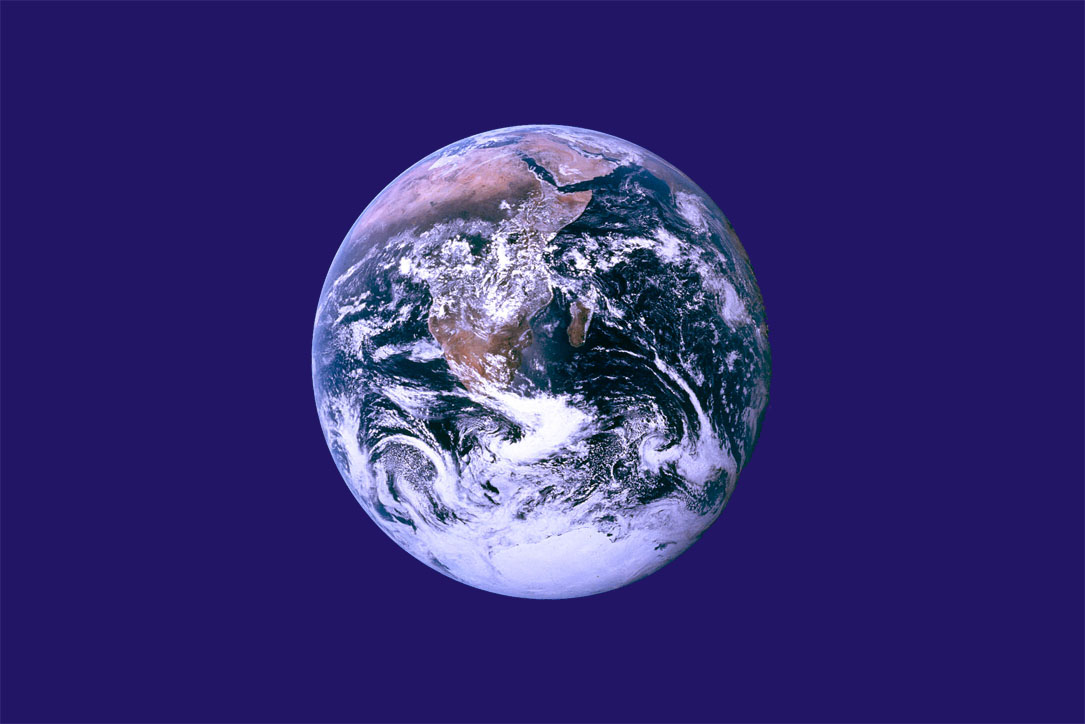
The Unofficial 'flag' of Earth Day
Meanwhile on TV, here in the UK there is nothing on the media, no, even subtle programming into the geoscience, instead the only two programmes on the BBC featuring the Earth are a play and Dr Who. The day coincides with Good Friday, so there should be plenty of time to slot in an interesting programme on geoscience or the challenges facing our world.

Overall in the UK there seems to be a lack of interest in Earth Day, which considering that this is the country that invented geology (more or less!), has lead pioneering research into climate change and has signed the Kyoto protocol – we should have the same resources available over here. The day is described as ‘worldwide’ day celebrating the Earth – why are we, in the UK being such party-poopers?

Tuesday, 19 April 2011

Sun, Sea, Sand and Good Exposure - Guide Books and Geology


Summer is well on its way; with days getting longer and coursework deadlines shorter it’s time to plan something to do with what small sliver of my student loan and overdraft remains. Which, along with the beautiful smell of summer starting to appear in the air set me thinking about guidebooks; so I ventured into the loft, dodging many a childhood toy to find a sizeable collection of books to see what they, if anything, say about the geology of the region they are describing.
Guide books could be great transmitters of geological knowledge, they are read at leisure, when people have time to both learn and see, often interesting geology corresponds with pretty places – a match made in heaven?

The books I have chosen for this rather un-scientific survey  are all for regions in Europe, (mainly France, Germany and Italy) from a variety of publishers; Lonely Planet, Rough Guide, The Green Guide and DK Guides – all very popular well stocked guidebooks both here in the UK and further afield.

Lonely Planets Option 
So, looking to my favourite holiday destination; Germany – also a country with interesting geology (foothills of Alps, Messel, Rhine etc) . The Lonely Planet makes no mention of any real geology;  ‘The Environment’ section, with all manner of information on animals and plants in Germany (some of which extinct)  and discussion of animals most visitors probably won’t see (Sea Eagles) – only the Eifel Region of volcanoes gets two lines; otherwise Germany is rock free.
DK, although much better noted for publishing really good children’s books have also dabbled in travel, producing rich books with lots of lovely diagrams of castles and two pages devoted to German authors, who, although great really do not appear in many holiday snaps. Even Eifel is ignored – but two pages on an obscure art gallery prevail – the book has ample opportunity to slide in geology – but would rather deal with paintings.

The Green Guide; published by Michelin (of tyre fame) fair much better, they have a whole ‘Landscapes’ page – which gives a quick overview of the Geology of Germany and then looks into more detail – with individual complexes named and how they relate to the geology of the region (i.e. Coal in the Rhin/Rhur valley) . It’s not perfect though, the book refers to the proterozoic as the ‘Primary’ era, which although easier on the non geologically trained, is wrong.  Still, it is a much better effort than DK or lonely Planet.
Beautiful Diagrams and Drawings,
but no geoscience

Looking to the South; into the beautiful, majestic and mountainous Switzerland, Rough Guide have published a nice friendly, concise and very full guidebook to the little country; well noted for it’s geology, from Suess’s insights into Plate tectonics to the country as a natural lab for glacial and tectonic processes. Rough Guide although discussing the beauty of the country – shamefully ignores the geology.  Instead, it finds plenty of time for old monarchs, leaders and anecdotes’. The guide is so good in other respects, offering complete knowledge of the regions history, culture and attractions – but what people are walking on, what has made that landscape and sculpted the history and culture is ignored.
And on to Italy; geologically fascinating and culturally rich. The Lonely Planet has a pleasant guide to the region – which unlike the German guide features an insight into the countries geology.  It gives an overview of the countries geology in simple pleasant language. Although, that is to be expected, the country hosts many geologically themed tourist hotspots (Etna, Vesuvius and the Campi Flegrei nr Naples) so since background information is provided into the countries monarchs and monasteries it seems right that the rocks are given a look in too.

DK guides also make an effort to redeem themselves too –their Italian effort features the Dolomites, beautiful mountains and they even mention the rocks – not in much detail, but at least to place a bit of geology in admirer’s heads – the volcanism gets a look in. Nevertheless, the book has rich diagrams of monasteries and castles that run over double pages – why not a brief diagram of Italy’s geology? Explaining the landscapes and volcanoes in a way that clearly works with the public could be exceedingly valuable – nothing special, but something informative.

Rough Guides have also published a guide on the Greek Islands – fascinating geologically, not that Rough Guide has taken any notice. Even Santorini – home of one of the greatest volcanic eruptions in history has it’s geological past only presented via the word ‘Caldera’ – hardly a worthy inclusion for such an incredible event.
A better effort from Michelin 

At present I’ve looked at guidebooks for a whole country (or large region), where perhaps ignoring the rocks could be acceptable – they have plenty of information to pack in – what about local guides? Unfortunately, I only have one type of guide to compare – the Green Guides by Michelin;

The Green Guides do not disappoint – I had expected good things having read the German one, but their guide to ‘Burgundy and Jura’ (regions in eastern France) was really very good, featuring a map of France and during the Mesozoic (which is a bit broad brush but useful). Although geological names are not used – instead ‘Secondary Era’ is used - but it is a start, given my affection for maps it is nice to see. The guide also runs through the regions geology (and resources) in a chronological session. The guide also provides a cross section – with individual discussions of the regions geology allowing tourists – the public to (hopefully) be able to make tangible links between the rocks below them and the landscape above them. The regions famed caves also have a geological interpretation – caves are rather tourist hotspots so relating their geology to tourists is always valuable.
Similar stories are present in the other two ‘Green Guide’ books that I have (Provence – with lavender on the cover and the Dordone. Looking back across to the UK the ‘South Downs Way’ guidebook, by Jim Manthorpe gives a decent description of the downs geology (to be fair – it is just chalk) and its structure - in fact in many ways its better than the description given by the area's local authority. Given that, people who read this sort of text are likely to be‘outdoorsy’ it seems sensible that a discussion on what makes the outdoors would be present. However looking through the book it’s not entirely fair to the geosciences, more space (and words) are handed over to Underground Power lines (important – but how many walkers’ questions will be about them?). Plus the discussion on geology barely touches the Weald – which is observable across much of the path; leaving many a walker (including my parents!) at a mystery to the landscapes formation.

So, guide books and geology?

Well, they are not designed to transmit geological information – but they are designed to give visitors to a region a taste of the areas attractions; which geoscience can be an important part of – the landscape is always there, why not then, give a nod to its creation? It seems very narrow minded of guide books (excluding those of ‘The Green Guide’) to exclude geology. After all, they give detailed discussion into the human history of an area; why not the (often more impressive) natural history?

Of course, the sample I have used here is limited, so I popped down to my local, previously slated bookshops to see what they had on offer. The patterns I have noticed with this small group of books is applicable to most other guides – even those of Cyprus, where the geology is fascinating, seem to be much more eager to discuss dancing and small villages than the story of the island.

There are a fair few, specific geological guidebooks, the GSA has published a fair few but these are not really suitable for the public, nor cover the sort of regions that guide books cover, plus the GSA is going for an already interested audience. About Geology has a bit on the geology of San Francisco, which if picked up by a tourist would be really cool (nice photo’s too) – but this is hardly readable from a delayed plane.

Guide books (from experience) appear to be read at times of relaxation; while waiting for a plane, train or automobile – what better time to give a reader geological information, impart knowledge and interest in a practical sense, while they have time, so often neglected in daily life to explore a region’s landscape and geology. I’m not envisaging entries like ‘the Cafe on the square serves an exquisite coffee, also provides brilliant views of the Triassic limestone over the town’, but a nod akin to those in the Green Guides would be good: the books after all are there to inform the public, communicate facts and knowledge – maybe they could communicate geoscience too.